In Theaters Now
- 2026
- R
- Netflix
- 2 h 44 m
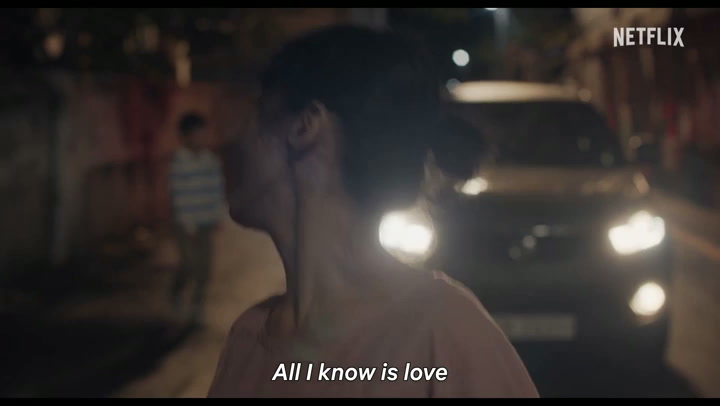
SummaryA story of two married couples — a laid-off worker and his spouse and a documentary filmmaker and her spouse — crossing paths to film a documentary and facing their different lives and hidden desires.
Directed By:Lee Chang-dong
Written By:Lee Chang-dong, Jungmi Oh
Possible Love
Metascore
Universal Acclaim

95
User score
Generally Favorable
6.7
My Score
Where to Watch
Not available in your country?
ExpressVPN
Get 3 Extra months free
$6.67/mth
Top Cast


Metascore
Universal Acclaim
95
100% Positive
33 Reviews
0% Mixed
0 Reviews
0% Negative
0 Reviews
Nov 4, 2026
100
Possible Love is the sort of singularly rich, overflowing, evocative drama that covers an entire spectrum of emotions, running the gamut from bliss to bad behavior. Even longtime fans of the world-cinema legend may be taken aback by what he’s doing here, and how deftly he’s doing it.
Oct 23, 2026
100
Simmering and subtly cumulative, the movie is full of overwhelming anguish, buried beneath a masculine stoicism forever threatening to come undone. This is a patient, deeply considered work, yet one electric with idiosyncratic detail and the discomfort of reckoning with the realities of class.
User score
Generally Favorable
6.7
68% Positive
42 Ratings
13% Mixed
8 Ratings
19% Negative
12 Ratings
Nov 27, 2026
10
Those who are not familiar with Korean cinema as a whole may get the impression that the film is about nothing. Wrong – it is a silent yet direct critique of labour exploitation and capitalism. It is no coincidence that this drama ranks amongst the best of the year.
Report
Nov 11, 2026
10
A slow film but an excellent film. One of the best movies of the year. Acting, screenplay, and direction are perfect.
Report
Sep 6, 2026
100
Possible Love is certainly not oblique or hard to understand, but in its exploration of the subtler issues of class, the thorny realms of desire and freedom that most films are forced to ignore, it’s one for the ages.
Sep 6, 2026
100
Possible Love understands that in an age when everyone is encouraged to turn their lives into content, even suffering can become a luxury enjoyed by those who are fortunate enough to be watching from the other side of the camera.
Oct 13, 2026
90
All the careful building comes to a head in the final third or so, when the film shifts locations and places the two couples' tensions under a microscope. The string of scenes that follow, aside from being riveting, are true showcases for this ensemble of actors, finally laying bare the full scope of their performances. The way Possible Love's ending ignites the ideas that have been percolating for its sizable runtime will leave them smoldering in the back of your mind for a long time to come – a surefire sign your time was very well spent.
Sep 8, 2026
75
Lee Chang-dong offers another trenchant look at simmering divisions in South Korean society along the lines of class, gender, and labor.
Nov 7, 2026
10
Okay a bunch of sinophobic losers brigading and spamming with negative reviews. Got it.
Report
Nov 15, 2026
9
“Thou shalt not covet.” With this caption begins ‘A Possible Love,’ the new film by Lee Chang-dong. Initially part of an ambitious tribute to Krzysztof Kieślowski’s ten-part ‘Dekalog,’ and winner of the Grand Jury Prize at the Venice Film Festival, the latest work by the acclaimed Korean filmmaker serves as yet another X-ray of his society—a subject also explored in recent times by other major Korean directors, such as Park Chan-wook and Bong Joon-ho. In this film, social division becomes the object of an exploration through a profound family and social drama that lays bare the flaws of late-stage capitalism. Yet, there is more: Chang-dong introduces an additional element that shifts the project into the realm of meta-commentary, questioning the very nature of cinema itself. It’s an intelligent work, crafted with the slow-burning, deliberate approach that has become the director’s signature.
Report
Nov 28, 2026
8
The more deeply one tries to understand, the more the differences become apparent, and the more strikingly depicted the tragedy of escalating.
Report
Nov 6, 2026
6
This is a typical example where critics await the new work **** director who hasn't made too many movies, and can't be honest about their disappointment. It feels like as if Lee Chang- dong tried to top Hong Sang-soo in wordiness, film length and lack of highlights. It's his worst work so far, quite boring, more like a theatre play and certainly welcomed by the actors. As a movie entry for the Oscars it's quite weak and uninspired as a film. The background: In the real-world 2009 SsangYong crisis, the anger wasn't just directed at abstract "corporate capital" or the South Korean riot police—it was fiercely directed at SAIC (Shanghai Automotive Industry Corporation), the Chinese state-owned majority shareholder. Lee shys away from that: The topic why governments take sides with the morally corrupt Chinese communist's doing.
Report
Nov 15, 2026
4
It should go without saying that “intention” plays a major role in shaping a movie’s narrative, especially when it attempts to convey important political, economic and/or sociological messages. It’s also crucial that such sentiments are delivered deftly, eloquently couched in the plot and any associated metaphors, without browbeating the audience or stumbling through the flow of the story. But, when these elements aren’t coordinated with the proper grace and dexterity, the picture usually fails, falling all over itself in the process, as is the case in this latest offering from writer-director Lee Chang-dong. In an unusual (and largely ineffective) effort to make a bold statement about South Korea’s broad economic disparity between the working class and the ruling class, the filmmaker puzzlingly attempts to address this subject through the experiences of two very different married couples. When a major corporate restructuring leads to a protracted employee strike that eventually turns violent, it leaves devastating emotional and physical scars on the workers, both in their professional and personal lives. So it is for laid-off laborer Ho-seok (Sul Kyung-gu), whose severe trauma has left him broken, beaten and demoralized and largely under the care of his devoted but quietly unhappy wife, Mi-ok (Jeon Do-yeon). She does her best to help her husband, but her efforts often go ignored and unappreciated – conditions that, unfortunately, have been present in their relationship for some time, as seen in a series of flashbacks. But this couple is not the only one to have been so impacted by this dispute; many other workers and their spouses have experienced the same. And their plight has consequently caught the attention of independent filmmaker Ye-ji (Cho Yeo-jeong), who is chronicling their circumstances in a new documentary, with Mi-ok serving as a key interview source. The two women subsequently become good friends, routinely socializing together, joined by Ho-seok and Ye-ji’s wealthy investor husband, Sang-woo (Zo In-sung). However, given the couples’ significant economic differences, they seem an unlikely foursome, a scenario that, ever so coincidentally, conveniently serves as a perfect (albeit derivative) metaphor for the state of South Korea’s class distinctions at large. In light of that apparent contrivance, then, how genuine are the individuals’ and couples’ motivations supposed to be? For instance, can Ye-ji’s seeming efforts at empathy toward her new friends be trusted? Is her film project a genuine gesture to extend a sympathetic helping hand, or is it a veiled (albeit unconscious) act of exploitation? And where does her quiet, conspicuously vague husband with all his money fit into this scenario? What’s more, are the entanglements on display here based entirely on class and economics, or are other hidden motivations and desires involved given their respective personal circumstances? If this all sounds muddled, confusing and more than a little melodramatic, you’d be right. While the filmmaker tries mightily to make a meaningfully relevant statement through a less-than-obvious approach, the pieces of this convoluted puzzle just don’t mesh well at all. They feel forced together, an embodiment of the square peg-in-a-round hole principle. Moreover, the more apparent it eventually becomes what the filmmaker is attempting to do, the more obvious, predictable and even juvenile it becomes. Considering the picture’s woefully overlong 200 runtime, he takes his own sweet time about it, too, incorporating a wealth of redundant, extraneous, meandering material in the run-up to a wholly unsatisfying conclusion. And, if all that weren’t enough, “Possible Love” has to be one of the worst titles I’ve ever seen assigned to a movie (what does that have to do with labor relations and class distinction?). In the end, this feels like a film put together by committee. Either of the primary story threads by themselves may well have made for an engaging picture, but certainly not as the mismatched pairing that’s been thrown together here. Indeed, intention really does matter.
Report
Production Company:
- Anonymous Content
- Netflix
- Now Films
- Pine House Film
Release Date:Oct 23, 2026
Duration:2 h 44 m
Rating:R
Awards
Blue Dragon Awards
• 4 Wins & 8 Nominations
Venice Film Festival
• 3 Wins & 4 Nominations
Gotham Awards
• 3 Nominations


