In Theaters Now
- 2026
- R
- Sony Pictures Releasing
- 1 h 52 m
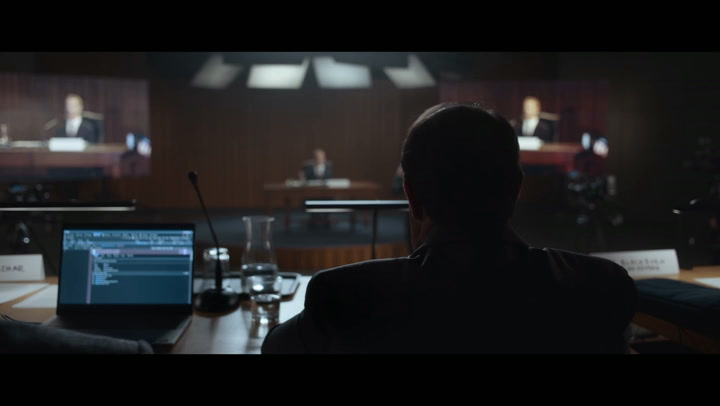
SummaryA companion piece to The Social Network, Aaron Sorkin’s original screenplay is based on the events that gave rise to the Wall Street Journal’s shocking exposé The Facebook Files. The film is inspired by the true story of how Frances Haugen (Mikey Madison), a young Facebook engineer, enlists the help of Jeff Horwitz (Jeremy Allen White), a Wall St...
Directed By:Aaron Sorkin
Written By:Aaron Sorkin
The Social Reckoning
Metascore
Mixed or Average
51
User score
Mixed or Average
5.8
My Score
Where to Watch
Not available in your country?
ExpressVPN
Get 3 Extra months free
$6.67/mth
Top Cast


Metascore
Mixed or Average
51
41% Positive
24 Reviews
48% Mixed
28 Reviews
10% Negative
6 Reviews
Oct 7, 2026
83
Sorkin does have a real knack for making complex topics like this palatable on screen. And in this case, these topics are incredibly important.
Oct 8, 2026
70
It’s reliably satisfying to watch David take down Goliath or, at least, hurl a few pebbles in the giant’s direction. It helps if David looks the part. One of Sorkin’s smartest moves here has been to pair White and Madison, complementary screen presences whose distinctive, off-center good looks and air of unforced sincerity make them natural underdog heroes.
User score
Mixed or Average
5.8
46% Positive
27 Ratings
27% Mixed
16 Ratings
27% Negative
16 Ratings
Oct 14, 2026
9
- An absolutely exceptional movie. In some ways, masterfully done. The most important thing for me about any movie is not how artistic it is or how difficult it is, but how entertaining it is. I was entertained and emotionally moved from start to end, all while the movie addresses one of the most important issues of our generation. It examines social media, algorithms, corporate responsibility, and political extremism. It is, IMO, essential viewing for all, particularly for parents, young people, and those interested in politics or tech.- The acting overall is excellent, with Bill Burr being the particular highlight for me. They make the complicated material engaging. However, Jeremy Strong was never strong as Mark Zuckerberg. Zuck is a well-known public figure, and Strong doesn't capture him based on how we know him. He felt like a fictional executive rather than the person himself. Jesse Eisenberg did a better and more convincing job in The Social Network (which I think most would say is the better movie, but I am adding points here for the message). Some other characters felt slightly stereotypical, and that reduced the realism. But overall, strong acting, even if nobody is winning an Oscar.- I wanted more emphasis on children's mental health and a broader political perspective. Sure, I get the plot device and focus on extremism and Capitol riots. But more attention to Instagram, body image, anxiety, and the psychological consequences for children and teens is what could unite the audience more. Everyone cares about kids. The film could have examined algorithmic manipulation across more political movements than the alt-right, where supported by evidence, reinforcing that protecting people's well-being should transcend partisan divisions.- For a drama movie, there could have been considerably more human drama. The movie does a lot of telling instead of showing. It literally just tells you what you need to take away through conversations and information rather than showing ordinary people living through these experiences. The latter, I think, is a better storytelling device. I wanted to experience the effects on children, parents, and families directly. Not just hear about them. Sure, the movie succeeds intellectually, but seeing the human consequences creates one of the most impactful things a movie can: an emotional connection with the viewer. Show, don't tell!- The movie also comes out in 2026, which I felt meant it missed some opportunities. This would have been a timely movie in 2022. But now we are several years later. Not that much has changed. Yes, our understanding has. Yes, we take the conversations more seriously. But did Facebook/Meta really change that much? The audience is left with too optimistic a message at the ending. More on that in the next point. But yes, that is also misleading the audience. The audience should know that the problems did not simply disappear once the wrongdoing became public.- The ending felt too victorious. I understand the basketball analogy. Why is he celebrating a tie? Throwing his fist into the air. It means they get into overtime. It is not won yet. But still important. Agreed. Overall, the movie is really good at small things. I think the funny lines and comedy land well. I felt the movie was funny in many parts, and I was laughing and entertained. I felt rewarded for following the movie, with many pieces of dialogue being used again later, where you think, "Ooo, I see what they did there. They used that from earlier in the movie!" The whistleblowers deserve recognition, but the hearings did not lead to sufficient change, and years later, we are still playing overtime. I wish the movie had made that unfinished struggle much clearer.- So yes, I think this was an exceptional film. My only other 2026 movie besides Project Hail Mary to score in the 90s. I left the cinema with the amazing feeling of "I am entertained." Yes, I give this movie probably a bit too high a rating if you look at it only from a filmmaking standpoint, e.g., editing, pacing, cinematography, technical difficulty, acting, plot, emotional connection, dialogue, filming, movie effects, costumes and design, and so on. Probably too high, but I was entertained, and it is a movie I hope many watch, so I give it some extra points.- We need conversations. This movie starts conversations. It does this exceptionally well. It is a deeply important movie about the power of social media and the responsibility of technology companies that can be shown to the masses.
Report
Oct 11, 2026
9
The Social Reckoning (15) is a sequel to The Social Network, the 2010 film which explored the origins of Facebook and its creator Mark Zuckerberg. That film showed us the ruthless side of the man but that was then, he is now the CEO of Meta the most powerful of the social media giants that influences our lives by taking up so much of our time. Algorithm isn't a word that gets mentioned in most films but here it is the driver for all we are hearing from the technically literate Frances Haugen (Mikey Madison) a data scientist employed in its Civic Integrity team to ensure that the organisation is meeting its ethical responsibilities. She finds that there is something rotten at the heart of the company as its algorithms are maximising profit and its usage by manipulating users of Facebook and its other sites by leading them to take actions that lead to their support of extreme political views or making young women criticise their body image with a subsequent decline in their mental health. The problem is that Frances loves Facebook and sees it as part of a progressive democratisation. She supports its stated aims but her professionalism and conscience have combined to make her a dangerous person for the company to employ, especially when they ignore her warnings. At the Wall Street Journal (WSJ) an investigative journalist Jeff Horwitz (Jeremy Allen White) is hired to work on the tech sector, although he is technologically naive as his late appearance at his job interview indicates. However Jeff is an expert in finding sources to get an insider view to contrast with the slick PR releases that Facebook issues about its aims including the promotion of free speech. He may not understand much about MSI and the other buzz words Frances uses but it is helpful for us, as we hear the dumbed down explanations that the exasperated tech expert has to give him. Given that Mikey Madison's previous big role was as an escort in the film Anora she is excellent as Frances, the data nerd who has the damning evidence on which Jeff can build a story exposing Facebook's economy with the truth. In parallel we see Mark Zuckerberg (Jeremy Strong) being coached by a team of employees to prepare him for his forthcoming appearance at US Senate hearings gathering evidence regarding article 230 of the Communications Decency Act which exempts Internet giants like Facebook from any liability for what appears on their webpages, unlike other media who are legally responsible for what they publish. Zuckerberg argues that his company is merely an enabler, the vessel by which others can disseminate their views and ideas without censorship, a 'corkboard' on which others can pin whatever they want. He will not arbitrate and give moral judgement, despite Facebook having a vast influence on what its users can see and share with others online. This is an excellent film which both entertains and informs. It intelligently discusses what we mean by free speech and its practical limitations and you don't necessarily have to agree with its progressive slant as the US Capitol Riot is used as an example of whether live footage should be pulled from the net to prevent crime and preserve democracy. That aside, great acting and a true story, make this a memorable film about the limits of power and public responsibility.
Report
Oct 9, 2026
63
As a movie chronicling the investigation of a journalist, this falls considerably short of All the President's Men (and "Fred" isn't nearly as intriguing an alias for the source as "Deep Throat"), but it tells its story and gets its point across about the dark side of social media. Too bad it fails to do anything more compelling.
Oct 7, 2026
60
But the performances aren't the point here, as Sorkin's signature dialogue moves things at a quick pace. It's funny, then, that the movie can't outrun the feeling of being dated, even just five years or so after the depicted events have taken place. It doesn't gesture to anything grander in its ambitions, instead laying out the facts of the situation and asking the audience to decide how we really feel about the role social media plays in our lives.
Oct 7, 2026
45
Inflating Zuckerberg to a one-note boogeyman, The Social Reckoning exaggerates to the point of reduction.
Oct 8, 2026
40
Ironically, Sorkin's main theme is the alarming power that social media platforms have to influence us, but The Social Reckoning itself is unlikely to influence anyone.
Oct 11, 2026
9
This movie didn't seem like a sequel - I think that's where some people are disappointed. It is an inside look into the importance of investigative journalism, business ethics, stakeholder conflict, and the danger of trading morals for shareholder value. A must-watch for anyone who doesn't understand how these platforms manipulate us (especially young people) or how executive decisions can cause serious harm.
Report
Oct 10, 2026
6
The Social Reckoning was OK. I did find parts of it very interesting, but other parts of it was just a bit boring. The performances by Jeremy Allen White, Mikey Madison and Jeremy Strong were great. But I think I was more excited to see the movie when I saw the trailers compared to what was actually shown on screen.
Report
Oct 9, 2026
6
Films designed to evoke righteous indignation among audience members have one vital task to fulfill: make sure they produce content and yield feelings that live up to their intentions. Unfortunately, that’s where this latest offering from writer-director Aaron Sorkin routinely swings and misses. Often inaccurately billed as a sequel to the screenwriter’s 2010 sensation “The Social Network,” this standalone companion piece to that release once again takes viewers inside the world of Facebook to expose the cracks in the social media giant’s supposedly impenetrable armor. This fact-based offering, spanning the years 2018-2021, focuses on idealistic Facebook researcher Frances Haugen (Mikey Madison), a firm believer in the organization’s mission of bringing people closer together but who uncovers some troubling secrets that shake her faith in the company’s allegedly altruistic objectives. And, when she attempts to raise her concerns with higher-ups, she’s summarily dismissed or politely told to shut up. That begins to change, though, when she meets an investigative reporter from The Wall Street Journal, Jeff Horwitz (Jeremy Allen White), who’s anxious to tell the big story with Haugen’s help. Frances is initially reluctant, not willing to take down her employer, but, when she digs deeper into the organization’s dirty laundry, she’s appalled by what she finds: a company that claims to be all for free speech but is indifferent about factual accuracy, a vehicle that contributed to the astronomical growth in the cyberbullying of youngsters by peer users and an algorithm that purposely directs unsuspecting site users into the arms of extremist groups. It’s enough to get Haugen to change her mind and work with Horwitz to blow the whistle. Given the size of Facebook’s user audience and the number of individuals who rely on it as their principal source of news and information, the scope and magnitude of this story are immense – but perhaps a little too much so to adequately address these issues in a two-hour movie. And, regrettably, the impact of that scenario doesn’t come through as powerfully as it should in the course of the film’s narrative. For one thing, the script is far too technical, bandying about social media jargon with the expectation that viewers will clearly comprehend everything that’s being discussed (while I appreciate the filmmaker’s avoidance of spoon-feeding the audience, there comes a point where enough is enough on this score). Then there’s the somewhat insipid portrayal of Horwitz, whose intrepidity in investigating the story is so downplayed that it might well lead audiences to wonder why he’s even bothering (Bob Woodward and Carl Bernstein he ain’t). To make matters worse, the pacing is periodically sluggish, in large part due to the underwhelming performance of Madison, whose weakness as an actress is nakedly exposed for all to see. But perhaps my biggest issue with “The Social Reckoning” is its ironic hypocrisy: in the closing credits, the picture features a disclaimer seen in many fact-based sagas indicating that some material was created for dramatic effect. However, how appropriate is that in a story where the matter of factual accuracy is a core theme of the narrative? (I’ll give credit to the filmmaker for acknowledging this, but that admission still raises the question of how much was made up and how significant was it to the truth of the story?) There’s also another key point that’s never meaningfully addressed in the film: While it’s difficult to defend the litany of Facebook’s sins, in the organization’s defense, the question remains, why did all those followers of extremist groups blindly allow themselves to be drawn into them by an algorithm? Didn’t any of those individuals ever hear of free will? And why is this subject never raised? (Seems to be a legitimate question to me.) Those considerations aside, however, the primary saving grace here is the absolutely spot-on portrayal of Jeremy Strong as Facebook founder Mark Zuckerberg, effectively building on the character first brought to life by Jesse Eisenberg in this offering’s predecessor only in an older (though not necessarily wiser) version. Kudos also go out to many of the other supporting players, such as Bill Burr, Betty Gilpin, Wunmi Mosaku and Gbenga Akinnagbe. Nevertheless, despite the strengths of these performances and the filmmaker’s willingness to tackle this inherently thorny tale, these accolades are not enough to overcome the production’s many other drawbacks. In fact, viewers looking to know more about the disquieting subjects raised in this film (and not just where Facebook is concerned) would better serve themselves to watch the excellent newly released documentary “Your Attention Please,” showing the reach of social media and the influence it has over us, especially among today’s youth. In the end, “The Social Reckoning” may not be a complete misfire, but it’s definitely not a bullseye or home run.
Report
Nov 27, 2026
3
The Docual Reckoning is garbage. The idea that legacy media and a single FB employee (who thought her friend was radicalized because of her reaction at a traffic stop, but still believed in the mission of FB) saved democracy, is laughable. And the smarmy ending with its Jan 6 footage, scored with semi-tragic, yet eerily patriotic(?) music, was tv movie melodrama. Let's ignore the obvious and more dire radicalization on the left (BLM riots and Antifa violence), because a few hundred white people took their grievances to the very place they should take them, instead of burning down their cities, and laud legacy media... for democracy, though we are not, in fact, one. Forget FB, lets hold Hollywood accountable for its part in the marketing dept of the DNC. And that **** and Mickey Madison cannot act. How the fuxk did Anora get Oscars?!
Report
Nov 25, 2026
3
(Mauro Lanari) 1) "Show, don't tell": a futile admonition for a screenwriter like Sorkin, unless a real director keeps him in check. And Zuckerberg goes from villain to bore. 2) There is no social engineering without prior market research: algorithms work when they tap into some pre-existing weakness, of which there is no trace here. In the causal attribution of responsibility, social psychology recommends a 50/50 split between supply and demand. In this case the closing title card gives us 46 to 54, yet through oversimplification Zuckerberg becomes a scapegoat detached from our complicity in the matter. 3) Even so, the film flopped: the main bit of good news. Madison and White deliver noteworthy performances.
Report
Production Company:
- Columbia Pictures
- Alcon Entertainment
- TSG Entertainment
Release Date:Oct 9, 2026
Duration:1 h 52 m
Rating:R
Tagline:We're way past making friends.
Awards
Harper's Bazaar Women of the Year Awards
• 1 Win & 1 Nomination
Astra Midseason Movie Awards
• 1 Nomination


