- 1998
- R
- Live Film & Mediaworks Inc.
- 1 h 24 m
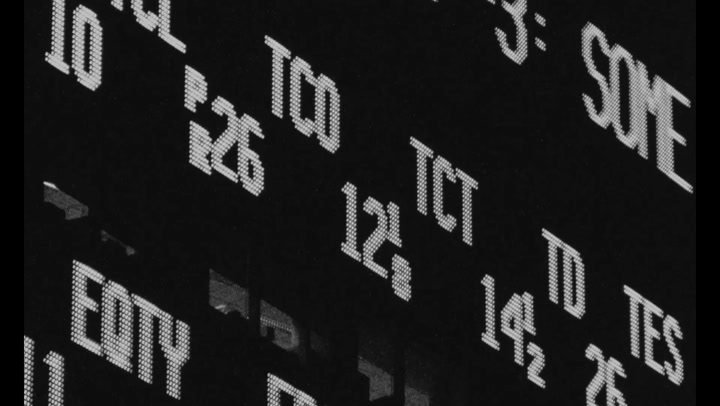
SummaryMax Cohen, a mathematician and computer genius, finds himself pursued by Wall Street traders and a Hasidic cabal in this award-winning film.
Directed By:Darren Aronofsky
Written By:Darren Aronofsky, Sean Gullette, Eric Watson
Pi
Metascore
Generally Favorable
72
User score
Generally Favorable
7.4
My Score
Where to Watch
Not available in your country?
ExpressVPN
Get 3 Extra months free
$6.67/mth
Top Cast


Metascore
Generally Favorable
72
78% Positive
18 Reviews
17% Mixed
4 Reviews
4% Negative
1 Review
90
Aronofsky's ability to capture the rush and confusion of racing down a timeline toward infinity, only to suddenly slam into a dead end, makes for impressive and occasionally disturbing stuff.
By Joshua Klein
FULL REVIEW 80
This is very much a first feature, with all the hyperbolic, sometimes indiscriminate cinematic energy of a student film. But it's also sensational, a febrile meditation on the mathematics of existence.
User score
Generally Favorable
7.4
79% Positive
103 Ratings
13% Mixed
17 Ratings
8% Negative
11 Ratings
Feb 3, 2026
10
Aronofsky’s portrayal of obsession and mental deterioration is phenomenal when played out on screen. The black and white gradients really put you in Maximillian’s place, not in focus of life or external occurrences, simply set on conclusion and resolution. The audience isn’t admiring the visual beauty of the film, they are simply living through it. That’s the genius of it.
Report
Oct 16, 2026
9
Pi is a restless and fascinating film that turns a mathematical investigation into a reflection on knowledge, obsession and the limits of human understanding. At its centre is Max, a man convinced that numbers and their relationships can reveal an underlying order in reality. Assisted by a computer that almost seems human, perhaps even an extension of his own mind, he searches for a numerical sequence capable of exposing a fundamental pattern. Such a discovery would not simply explain the world, it might also make reality predictable or manipulable. This is why different organisations pursue Max’s findings, hoping to transform mathematical knowledge into power and approach something like omnipotence. Yet the closer Max believes he is getting to the truth, the more unstable his world becomes. The boundary between what takes place outside him and what exists only in his mind grows increasingly difficult to distinguish. His recurring migraines seem to function as moments of revelation, ruptures in ordinary perception during which he can glimpse something inaccessible when he is lucid. Whether these experiences are genuine insights or hallucinations remains unresolved. Repeated sequences, visual patterns, the Fibonacci sequence and the golden rectangle reinforce the conviction that nothing is entirely random and that the world might be reducible to numerical relations. At the same time, these recurring motifs expose the compulsive nature of Max’s search. Sol, the elderly mathematician who previously sought a fundamental pattern in π, provides a warning about the dangers of such a pursuit. The film’s philosophical dimension can be understood in Camusian terms, human beings long for definitive answers, but reality offers no guarantee that their questions will ever be resolved. Max becomes a wanderer of Being, trying to grasp an absolute that may be unbearable for a finite mind. His quest is both admirable and deeply disturbing, driven by the desire to understand the world but increasingly destructive of his ability to inhabit it. The ambiguous ending, especially Max’s apparent amnesia, leaves open whether the loss of his revelation is a defeat, a form of liberation or an acknowledgement of the limits of human knowledge. The film’s style makes this conflict tangible. Max seeks perfect order, yet his mind and surroundings are increasingly chaotic. Frantic camera movements, unstable shots and suffocating spaces draw viewers into his nervousness and disorientation. By repeatedly blurring reality, perception and delirium, the direction makes us experience the very uncertainty that torments him. The claustrophobic atmosphere also suggests a deeper awareness of confinement and limitation, counterbalancing his aspiration to comprehend the infinite. The black-and-white photography is crucial to this effect. Beyond intensifying unease and melancholy, it evokes the coldness of a world understood through measurement and calculation, a world that ultimately alienates the person attempting to master it. The cinematography is particularly effective in its close-ups, especially during the protagonist’s final “siege”, when they communicate his acute sense of persecution. Rapid cuts alternate with calmer moments to create an almost arrhythmic pace that reflects his fluctuating mental state. Suspense builds from the constant suggestion that a definitive revelation is near, even as the film refuses to supply an unambiguous explanation. The technical and dramatic elements are equally persuasive. The sparingly used special effects are effective, while the electronic soundtrack is unforgettable, its rhythms and compositions merge naturally with the images and deepen the atmosphere of obsession, alienation and unease. The performances are strong throughout, with Sean Gullette particularly convincing as Max, conveying both the intensity of his intellectual hunger and the fragility beneath it. Ultimately, Pi is not simply about mathematics or the possibility of discovering a hidden universal code. It is about the unsettling distance between humanity’s desire for absolute knowledge and the uncertain, open-ended nature of reality. Numbers promise order, control and even access to the divine, but the effort to possess the absolute threatens to overwhelm the person pursuing it. Rather than resolve that contradiction, the film leaves us with a compelling question: how far can human beings go in the search for ultimate truth before the search itself destroys them?
Report
78
Brilliant, surreal, and emotionally draining, this first feature from American Film Institute grad Aronofsky recalls such low-budget sci-fi epics as "Tetsuo: The Iron Man" and more traditional paranoiac suspense films (Adrian Lyne's "Jacob's Ladder" in particular, but also Polanski's "Rosemary's Baby") and yet manages to be a wholly original animal.
75
The movie's freakazoid intensity gets to you, but there's something at once cramped and show-offy in Aronofsky's refusal to even slighty vary its atmosphere of shock-corridor burnout.
70
As smart as it is, Pi is awfully hard to watch. Filmed with hand-held cameras in splotchy black-and-white and crudely edited, it has the style and attitude of a no-budget midnight movie.
60
In the end, it's primarily a brain teaser, obtuse and ultimately limited in its emotional impact.
30
With this odd mixture of elements the film's tone is gloomy, portentous, and hysterical, yet at the same time strangely earnest and square, as if David Lynch had tried to somehow make a movie version of Scientific American.
By Bill Boisvert
FULL REVIEW Feb 2, 2023
9
It is a movie, one of those that come to you on its first viewing. If you are a fan of Darren Aronofsky's cinema, you will have a pleasant feeling when you see it. It is a movie for a certain audience, which is looking for another type of cinema.
Report
Jul 16, 2011
6
High contrast black and white film, effective and innovative camerawork, and well done editing make Pi an enjoyable experience. The plot, the barely connected math terms, the mediocre acting, and (at times) laughable dialogue take off some major points for the promising director Aronofsky.
Report
Jun 22, 2013
5
The 15th anniversary edition of Pi is being released, and as an admirer of the film, Black Swan, I finally availed myself of the opportunity to see a movie that has to be termed Early Aronofsky. Filmed in black and white, it is the confusing and excessive story of a mathematician who has stumbled upon a data stream of 216 numbers that is a secret code coveted by both greedy Wall Street moguls and religious Hasids. In an eerie and perhaps brilliant precognition of the kind of vice and avarice that would overwhelm Wall Street ten years later, the financial fiends believe the number will give them control of the stock market. The Hasidim believe the number is the pattern they have been searching for in the Torah, which will give them the true name of God and somehow restore the Temple and the ancient glory of Judaism. The mechanism for how this is supposed to work is unclear, but Max Cohen, the mathematician played by Sean Gullette, is being followed and harassed by all parties because of his intellect and his innate ability to decipher this code. As a child, Max's brain was affected by an incident where he almost blinded himself by staring into the sun, and the trauma turned him into a mathematical and computer genius. Aronofsky's 1998 vision of a computer genius was already outdated as we see Max sitting in an apartment with an enormous home-built computer that takes up the entire apartment. At that time, personal computers with their small CPU chips were not only in widespread use, they were much more powerful than any home-built computer could ever hope to be. The first programmable computer, called ENIAC, which was built in the 1940's, filled an entire room, weighed thirty tons, and contained 18,000 vacuum tubes--and ENIAC was much less powerful than a typical personal computer. So a computer genius in 1998 would have been very happy to have an IBM PC sitting on his desk in his small apartment. It would have been all he needed. The Kabbalah behind the story is also a little weak. The 216-letter name of God is one of several that are considered to be the true name, the most famous one being the four Hebrew letters of the Tetragrammaton--yod, hey, vav, hey, or YHVH in English, and rendered erroneously as “Jehovah” by Christians. The name is not supposed to be spoken; thus, the original, ancient pronunciation of the Tetragrammaton has been lost and no one knows how to say it. The 216-letter name referred to in the film is actually the 72 names of God, all of them consisting of three letters (therefore adding up to 216), and all of them well documented and well known to the Hasidim. The film is a psychological thriller with nerve-wracking music as Max races to find this 216-number data string. It causes him migraine headaches, paranoia, over-the-top agitation and distress, and too many times Max is screaming, passing out in his apartment, and waking up with a nosebleed. When he leaves his apartment, he is often being chased by the people who want the number, and the camera work is so dizzying that the viewer ends up getting vertigo. The denouement is not very satisfying--some intrigue is built up in the plot device of a numerical pattern that could control the stock market or restore the Jews to a messianic age, but in the end, the tortured Max drills a hole in his brain, which should have killed him, but fiction being what it is, instead just takes away the mathematical talent that makes him a hunted man. After performing this operation in his bathroom, Max can live a normal life. The film is historically of interest because it is suggestive of the later themes that Aronofsky will treat with greater success and detail in subsequent movies.
Report
Oct 6, 2010
3
A low budget film shot in grainy,melancholy black and white with international implications to do with the stock market? It simply does not work for me. The religious element as well? This film went straight over my head!
Report
Dec 15, 2018
2
God, man and the Math. It should be the interesting story but this movie is not even close.
Report
Production Company:
- Harvest Filmworks
- Truth and Soul Pictures
- Plantain Films
- Protozoa Pictures
Release Date:Jul 10, 1998
Duration:1 h 24 m
Rating:R
Tagline:There will be no order, only chaos
Awards
Online Film & Television Association
• 4 Nominations
Film Independent Spirit Awards
• 1 Win & 3 Nominations
Sundance Film Festival
• 1 Win & 2 Nominations


