In Theaters Now
- 2026
- R
- Netflix
- 2 h 35 m
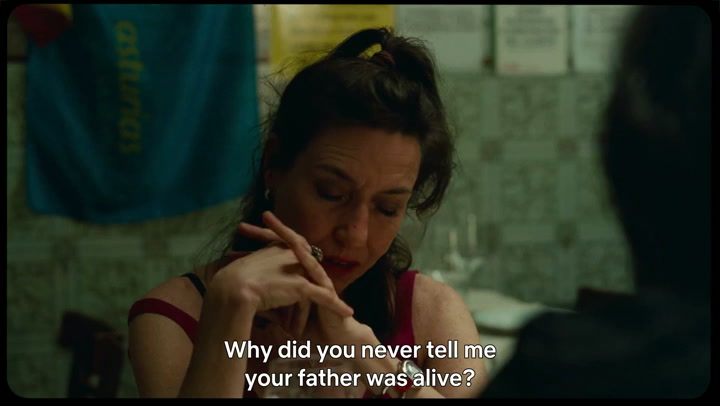
SummaryLa Bola Negra tells the interconnected stories of three men in three different eras. Three lives intimately linked by sexuality and desire, pain and inheritance, and one of Federico García Lorca´s last, unfinished works.
Directed By:Javier Ambrossi, Javier Calvo
Written By:Javier Calvo, Javier Ambrossi, Alberto Conejero, Federico García Lorca
La Bola Negra
Metascore
Generally Favorable
77
User score
Generally Favorable
7.7
My Score
Where to Watch
Not available in your country?
ExpressVPN
Get 3 Extra months free
$6.67/mth
Top Cast
Metascore
Generally Favorable
77
85% Positive
35 Reviews
12% Mixed
5 Reviews
2% Negative
1 Review
Nov 6, 2026
100
La Bola Negra isn’t a flawless masterpiece. The 2017 section is sometimes a little humdrum, at least compared to the glorious 1930s portions, and if you go in knowing little about the Spanish Civil War, you won’t leave feeling enlightened. But it is a terrifically stylish, tremendously moving film that reaffirms an incontrovertible truth – that when people are forced to hide who they are, absolutely no one wins.
May 25, 2026
100
The result feels like a Gabriel García Márquez novel with a rocket under its bum.
User score
Generally Favorable
7.7
78% Positive
49 Ratings
8% Mixed
5 Ratings
14% Negative
9 Ratings
Nov 12, 2026
10
Very few films leave me thinking less about whether every technical decision was perfect than about everything I felt while watching them. The Black Ball gave me chills, made me think constantly and eventually broke me emotionally. By the time "La Nieve" began to play, I was already crying. Javier Calvo and Javier Ambrossi take the handful of pages Federico Garcia Lorca left unfinished and build three stories set at different moments in Spanish history. They are not simply trying to imagine how that lost work might have ended. Their ambition is much larger: to consider how many human lives, like that text, were also left unfinished because somebody decided certain people were not allowed to love, speak or exist openly as themselves. That is where I found the heart of the film. The historical sections contain images that have stayed with me. A crowd can celebrate, flags can wave, music can play and everything can resemble a party, while underneath lies terrible violence. That contradiction between celebration and the reality of a civil conflict -victors, defeated people, repression, fear and silence- is deeply unsettling. Sebastian embodies that conflict beautifully. He often seems divided between the world surrounding him and what he actually feels. Watching him, I kept thinking about how many other people in periods of repression must have done exactly the same thing: staying quiet, performing enthusiasm or hiding their beliefs simply to avoid suspicion. The film understands that repression is not only about laws banning something. It is also about teaching people to police themselves. And that idea moves through all three periods. Homosexuality is naturally central to the story, but I do not think The Black Ball ultimately speaks only about gay men. Its idea becomes much wider. It speaks about anyone who has ever felt that belonging required hiding an essential part of themselves. My reading of Lorca while watching the film became very simple: a person should be able to express what they feel without fear. A man should be able to say he loves another man. A woman should be able to love another woman. A trans person should be able to say who they are. A child who understands very early that they are a girl should be able to say it without immediately wondering what their parents, friends, neighbours or the rest of society will think. Nothing more complicated than that. For me, that is real freedom. Not having other people "tolerate" your existence. Not needing their permission. The freedom for your own life to belong to you. Carlos is perhaps where that idea affected me most deeply. There is something devastating about what fear of rejection can do to a person who spends years separating what they feel from what they dare to show. The film does not need constant speeches to explain that conflict. We see it in behaviour, contradictions and everything left unsaid. I also loved the way the contemporary story uses Lorca's unfinished text. The question of what should be done with the remainder of an interrupted work gradually becomes another version of the same question: what do we do with everything the past has left us? Do we hide it? Do we reshape it until it becomes comfortable? Or do we finally let it speak? Visually, the film is enormous. Gris Jordana moves from intimacy to almost painterly images, while Calvo and Ambrossi show no fear of excess. At times the screen is filled with music, bodies, symbols, desire and pain. It could have overwhelmed me. Strangely, it never did. Even the first half never felt long. I entered these lives and wanted to continue following them. Penelope Cruz also has an extraordinary sequence where entertainment and threat occupy the same space. But what truly unifies the film is the sense of memory travelling across decades. Alberto Gutierrez's editing makes the three stories feel less like separate narratives than different manifestations of the same wound. And then there is Raul Refree. His music gives the film something that cannot be explained entirely through technique. "La Nieve", especially, struck me from its first notes. It is sad, delicate and almost comforting. In that moment, the entire film seemed to collapse into one feeling: the enormous pain of a life that could not be fully lived, and the strange relief of finally no longer having to hide. I cried from the moment it started. The Black Ball is about Lorca, the Spanish Civil War, desire and **** memory, but I finished it thinking about something much simpler and more universal: we only have this one life. What a tragedy to waste it spending years playing the person other people expect us to be. And what an obscenity for somebody else to take that life away merely because they wanted to stop you from being yourself. For me, no other rating was possible.
Report
Nov 5, 2026
10
Oscura obra atravesada por luces Una historia de historias. Un tejido perdido en el tiempo, cosido para recomponer una dura realidad pasada conectándola con la actual. El arte de esta película trasciende generaciones y géneros, la cámara, las escenas, frases enormes, mensajes que retumban en el corazón, la música... Cuesta describirla debido a la inmensidad que abarca. Como afirman acerca de la obra inacabada de Federico García Lorca "La Bola Negra", hay un mensaje que es que no te niegues a ti mismo para poder vivir. Sin duda esta película hay que vivirla.
Report
Sep 23, 2026
91
It defies the pragmatism of the present by looking at the past with ecstasy and toward the future with world-changing imagination. La Bola Negra gives this idea a visual maximalism and gives its audience a methodology of hope that will persist as time dances on.
By B. Panther
FULL REVIEW Nov 6, 2026
80
It feels like three films for the price of one, but crucially also one coherent film – the work of directors who aren’t hanging around.
Sep 23, 2026
80
This sprawling epic is lavishly mounted and richly layered, sometimes to its own detriment. But it is also a visually ravishing, boldly ambitious, unapologetically high-camp celebration of queerness, artistic creation and sexual liberation.
May 21, 2026
70
More effective as an earnest, cumulative emotional journey than as a viewing experience made up of rather random parts, La Bola Negra does eventually repay some of the batter
Nov 4, 2026
30
All three stories, whatever their theatrical provenance or cinematic intent, are marred by the same odd insubstantiality; it’s as if the directors, brandishing a rigid narrative and thematic blueprint, were unable to marshal character, dialogue, and action in service of their overarching designs.
Report
Nov 8, 2026
9
A beautifully woven romantic journey, this film reminds us that the more things change, the more they stay the same, a message that needs to be shared now more than **** Javiers demonstrate fantastic direction, extracting solid, natural performances from a cast composed largely of newcomers. The film is beautifully shot, with each era given its own distinct look while remaining visually coherent as a whole. Meanwhile, the exhilarating score by Raül Refree infuses an emotional layer of romance and desire for freedom that truly makes the film **** would have been nice to have a touch more humor to help carry the weight of the heavy subject matter throughout its runtime. Some of the plot twists do get extra melodramatic, but that is a key element of epic romantic cinema and a staple of Spanish storytelling often found in Almodóvar's work. Those story beats are not all that surprising, and they never truly try to hide the hints, planting the seeds in plain sight. Thankfully, the editing integrates the three periods with a graceful flow that keeps the pace light, ensuring we never feel bogged down in darkness.While the filmmaking craft may occasionally outshine the actual story, the overall result is a win that will touch your heart.
Report
Oct 17, 2026
6
To watch or not to watch?I t’s curious, because I enjoyed La bola negra much more as a story than as a film. There is a great concept, interesting characters, connections, disconnections, and wounds that span across different eras. The problem is that the movie constantly seems to be trying to prove that it is a great film.There are moments when everything feels too big, too polished, too solemn, too musical… too much of everything. And of course, it reaches a point where you start thinking that perhaps with a little less, we would have received so much more. Cinematography and Visuals Here, it would be unfair not to acknowledge the craftsmanship. There are spectacular shots, meticulously studied lighting, costume design, set decoration, composition, and camera movements. Visually and photographically, there is so much to enjoy. But a shot can be beautiful and yet linger longer than the story actually needs. That happened to me several times. There are scenes that seem to pause the movie simply for us to admire how beautifully constructed the image is. Pretty, yes. Necessary for that long? Not always. Acting and Direction Here, I'm giving a significantly higher score. The cast delivers great performances, managing to make stories separated by time emotionally belong to the very same place. There is desire, fear, need, and family wounds. It’s almost an emotional funnel: different eras, people, relationships, and circumstances enter at the top, and something surprisingly similar comes out at the bottom. That is where the film truly has **** issue lies more with the direction and execution.Javier Calvo and Javier Ambrossi wanted to build something big, ambitious, and visually powerful. And they achieved it. Perhaps a bit too much.I have the feeling they wanted to make it so good, so important, and so cinematic that, at times, it slipped out of their hands. A long two and a half hours needs to justify every single minute. And here, there are minutes that seem to justify nothing more than their own beauty. My Final Reflection It leaves me with an interesting thought: almost nothing in life is completely white or completely black. Everything depends on where we are looking from, when we are looking from, and, above all, through which wounds we are **** same story can mean love to one person, guilt to another, desire to a third, and shame to someone who had to live through it in another era. Perhaps that is why its different time periods work. The settings change, the rules change, and what we can say out loud changes, but certain human needs **** want to be loved. We want to be able to be who we are. We want to stop hiding parts of ourselves. I like what La bola negra has to say. I like its actors. I like much of what I see. But behind so much beauty, I believe there was an even better movie that needed just one thing: for someone to dare to cut half an hour from it.Because sometimes, trying to make something too big can end up making it smaller. I didn't hear any applause in the theater ;(Fructu Navarro
Report
Nov 14, 2026
5
Lengthy bit of García Lorca fan fiction has lots of historical sweep, but I rarely felt swept away. In many ways this is exactly the sort of capitol-A Art Film that convinces a lot of people that they hate art films: it’s long, pretty, gravely serious, initially confusing with its multiple storylines, dense with incident- but told at arms-length. I was thankful for the brief appearance by Penélope Cruz- she injects needed charisma into the thing. When Cruz exited stage-left I wanted so badly to follow her out. This will likely become a new standard bearer of **** Melodrama amongst the opera-set… it was just too unwieldy for me.
Report
Oct 16, 2026
3
The hype for this film on social media was sky-high, so I came with big expectations. Alas, these expectations were far from being met, and I went out of the film finding it not all that exceptional, and feeling mostly underwhelmed. The story is very good and was executed mostly very well— the script was good, and the direction and cinematography were very good— astonishing at **** at some point, the ambition the film tries to bring to life starts to outpace its experienced coherence. Trying to pass as a historical epic with three intertwined timelines, a deep exploration of an artistic legacy, and a tribute to Lorca all within the same, rather excessive, runtime— it ultimately falls short. The scope is truly impressive, but it also means not much gets to breathe properly, and the execution, storytelling-wise, remains mostly lacking. As the movie progresses, even after the halfway mark, it keeps expanding rather than converging, with material that keeps on arriving because the plethora of intentions the movie aims at requires it, yet not because the story is actually ready for it. While the thematic ideas behind the film require a bloated runtime, the substance that actually draws the viewers in and keeps them engaged throughout does not match in scale, so ultimately, and quite ironically, I found the film exceedingly overlong, with many scenes taking much more time than they required, and with the movie overstaying its welcome at some point forward. The third act, specifically, felt a tad tiring— when you feel like the film already successfully reached its climax and made its point, there’s another scene, and another scene, and another—and the final runtime truly felt unjustified in relation to the actual story the film was telling. The acting was good, and so was the editing, albeit as I mentioned earlier, the film suffers from glaring pacing issues, and the screenplay certainly could have benefited from some editing or trimming. One of the most noticeable things about the film, right from the very beginning, is that it falls victim to “Style Over Substance”— placing extreme emphasis on various artistic elements at the expense of the story or, more than anything, its execution and the way it is conveyed to the viewer in an engaging **** film’s story is very interesting, and it is also structured in a unique way that potentially could have made the story even more compelling. But this focus on grandiose production design, artistic shots, and all sorts of exaggerated visual gimmicks actually often takes away from the immersion in the story and the world itself. Subtlety is not the name of the game here, which amounts to a deficiency of impact of the story over time, not allowing the film's real highs to feel as such while instead they blur inside the grandiose big picture on many occasions. That being said, and I truly don’t want to understate this since there is a lot in these aspects to applaud as well, the film’s scale, when at its best and not on the over-the-top side— the captivating cinematography, meticulous production design, energetic musical and dance sequences, etc.— functions as a tour de force of the visual language of cinema. The use of expansive sets, real crowds, and an old-fashioned, hypnotic aesthetic builds a rich canvas that feels grand at times and very authentic all the time, rather than digitally inflated and artificial. The film is truly a technical marvel— when it works for better or for worse— and there’s a real epic feel to it throughout. It could have been a little more balanced for my taste, though. Overall, 'La Bola Negra' is a decent film that is made very well on a technical level but lacks something that would make it truly remarkable. It's much longer than it needs to be— even boring at times— and while it tells an important and interesting story through a very original structure, the writing leaves something to be desired.
Report
Production Company:
- Movistar Plus
- Suma Content
- Los Esquiadores
- El Deseo
- Le Pacte
- Atresmedia Cine
- Crea SGR
- Telefónica Audiovisual Digital
Release Date:Oct 16, 2026
Duration:2 h 35 m
Rating:R
Awards
European Film Awards
• 10 Nominations
José María Forqué Awards
• 5 Nominations
Cannes Film Festival
• 1 Win & 3 Nominations


